

Why does your electricity bill barely move once the heat of summer fades? Many households in Morocco expect October to bring relief, yet the AC often keeps running into the month while a heater switches on at night soon after. This article walks through how ONEE charges you, what butane heating costs right now, and the steps that turn energy saving into a habit rather than a hope.
Why your bill stays high as the season shifts
Autumn in Morocco does not arrive at the same pace everywhere, and that gap is where money leaks. In Marrakech, daytime temperatures in October run from 25 to 31°C, with nights between 14 and 18°C, so air conditioning often stays in use well past the first cool evenings.
Meanwhile the north and the mountains move faster. In Casablanca and Tangier, November average temperatures range from 14°C to 20°C, significantly cooler than October, and high-altitude areas like Ifrane see temperatures between 9°C and 20°C already in October. A household that keeps cooling one week and starts heating the next pays twice for comfort, without ever adjusting its plan.
How ONEE's tariff bands decide what you pay
The price per kilowatt-hour in Morocco is not flat. The ONEE domestic kWh price runs from 0.9010 DH on the first bracket (0 to 100 kWh) up to 1.5958 DH beyond 500 kWh per month, including 18% VAT. The more you consume in a billing cycle, the higher the rate on the extra units.
Timing matters too. According to ONEE, the kWh during normal hours costs about 1 DH less than during peak hours. Note also that the grid you depend on is not always ONEE directly: what changes if you are served by a utility like Lydec or Redal rather than by ONEE can affect the exact figures on your bill, so it pays to check which operator issues yours.
Heating choices and what butane really costs this year
Many homes in Morocco rely on bottled butane gas for a heater, a water heater, or a stove, so its price shapes any autumn energy saving plan. As of late 2025, the 12 kg butane bottle stays at 50 DH and the 3 kg bottle at 12.5 DH, a price the government has chosen to protect rather than let rise.
That protection has a real cost to the state, which is worth knowing because it explains why the price has stayed stable. The price of the 12 kg butane bottle stays unchanged for consumers, with the state raising its subsidy to 78 dirhams per bottle, against 30 dirhams before the crisis. For a single room, a butane heater on a capped-price bottle is usually cheaper to run than an electric heater pulling steady wattage that can push your monthly total into ONEE's higher kWh bracket.
What people get wrong about autumn energy saving
The most common mistake is treating "autumn" as one uniform season across Morocco. Early October still brings real heat to Marrakech and the south, so switching off cooling too soon just leads to discomfort rather than savings, and turning it back on later costs just as much as before.
A second misunderstanding concerns the butane bottle price itself. The original plan was a steady climb: the price was due to rise annually by 10 DH, from 40 to 50 DH in 2024, 50 to 60 DH in 2025, and 60 to 70 DH in 2026. That schedule was paused: the second increase, expected for 2025, will not happen, the head of government confirmed. Anyone budgeting for a 70 DH bottle this year is planning around a figure that no longer applies.
A third gap is assuming the electricity rate you pay stays the same all month. Crossing from one consumption bracket to the next changes the price on your additional units, not just your total bill, which is why tracking your meter mid-cycle tells you more than waiting for the invoice.

Energy saving in practice: your autumn checklist
Start by reading your meter around the middle of your billing cycle, not just at the end. Comparing that reading against the ONEE brackets tells you whether you are close to crossing into the next, higher-priced tier for the rest of the month.
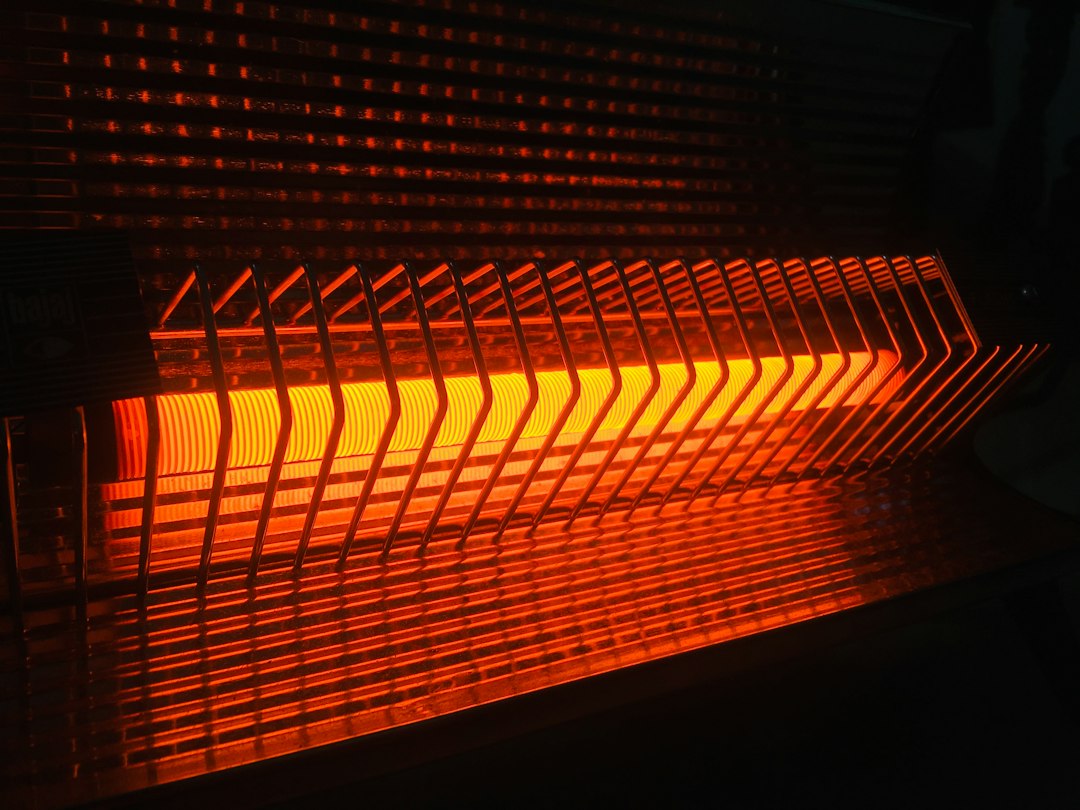
If your contract includes a peak and off-peak option, move laundry, dishwashing, and water heating to the cheaper off-peak hours whenever your schedule allows it. Reserve any electric heater for genuinely cold rooms, and prefer a butane heater for single-room heating while the 12 kg bottle price stays capped.
Before the heavier November rain arrives in the north, where Tangier sees rain on about 11.1 days in November, accumulating around 135mm, check door and window seals in rooms you heat. Damp drafts force a heater to work harder for the same comfort, which quietly erases whatever you saved elsewhere.
Finally, close off rooms you do not use each evening rather than heating the whole home. A house in Casablanca or Rabat does not need Ifrane-level insulation, but the same logic of concentrating heat where people actually sit works in any Moroccan autumn.